Lenne Steinbeck
Consulting & Development
Menu
Menu
Lenne Steinbeck
Consulting & Development
Menu
Lenne Steinbeck
Consulting & Development
Lenne Steinbeck
Consulting & Development
Lenne Steinbeck
Consulting & Development
Lenne Steinbeck
Consulting & Development
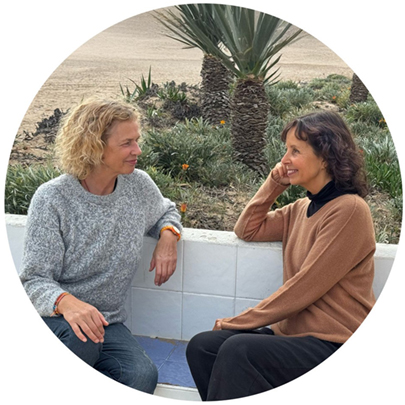
Question: Hey Lenne, what a beautiful name. How did you come to change your name and take on a new first name?
Thank you for the compliment! This decision was an important step in my journey of self-discovery. For me, ‘Lenne’ is much more than just a name – it is an expression of my identity, a source of strength and inspiration.
After coming out as a lesbian, I quickly realised that my journey to becoming myself was not over – on the contrary, it was just beginning. Over the years, I have increasingly identified as non-binary, even though I lacked the appropriate words for it for a long time. The official name change, which goes hand in hand with my registration as ‘diverse’ (non-binary), is therefore an important step towards fully accepting and making visible my authentic self.
Thanks to the new German Gender Equality Act, I can now also have my identity legally certified – a moment that is of great importance to me. You have also been an important supporter on this journey, and I am very grateful to you for that! Without the encouragement of my friends and other important supporters, this step would not have been so empowering and affirming. All of you have helped me not only to define my identity, but also to live it freely and confidently.
Question: Thank you, Lenne. I’m happy for you too! In recent years, you have developed further professionally. Among other things, you have completed a mediation qualification. What prompted you to do this and how did you find the training?
In my work as a consultant, I have increasingly come into contact with conflict moderation. At the same time, I have long been interested in non-violent communication according to Marshall Rosenberg – a method that brings clarity, trust and joy into interpersonal communication and thus contributes to resolving conflicts in the long term. I wanted to deepen my knowledge in this area because I firmly believe that consciously expressing feelings and needs can be an essential basis for cooperation and genuine win-win solutions.
Taking part in the course at the School for Understanding and Mediation Steyerberg was an incredibly enriching experience. My trainers are true experts in this field, and I experienced the entire training programme as an intensive, multi-faceted group process. Today, I feel equipped with a variety of techniques and methods to professionally support complex disputes and conflicts and to identify new perspectives.
Especially in a time when language is often characterised by harshness and violence, this training has helped me to communicate more consciously. I can de-escalate conversations in a targeted way, conduct them peacefully and support people in really understanding each other.
Question: I find it exciting that you are now also working intensively on discrimination issues and are committed to them. What does that mean to you, and what are your most important experiences and insights?
Through my many years of international work as a manager of large events and projects, my work as a coach and consultant, and my personal experiences with exclusion and discrimination, I have developed a deep awareness of the importance of mindfulness and respect in dealing with each other. At heart, I am an ‘awareness specialist’ – always open to different perspectives, experiences and opinions. At the same time, we live in a society characterised by unequal power relations, in which people are systematically favoured or disadvantaged on the basis of certain characteristics. While anti-discrimination policy in Germany lags behind EU standards, we unfortunately also see discrimination becoming increasingly widespread and uninhibited again.
Some of my most inspiring moments were working with Special Olympics Germany and the Berlin Senate. Anti-discrimination programmes were developed specifically for the Special Olympics World Games and the European Football Championship, and I had the opportunity to actively participate and coordinate parts of the implementation. For the European Football Championship in particular, we worked on a pilot project in the fan zones in Berlin, where awareness teams were deployed to provide preventive support for those affected by discrimination. It is encouraging to see that awareness concepts, which originally emerged in the club scene, are now increasingly becoming standard practice in the sports and events sector – an area in which I will continue to be closely involved.
In addition, I have specialised in workshops and training on discrimination issues and sexual violence in the workplace. It is becoming increasingly clear to me that many organisations have a need to catch up here and are looking for targeted support. It is a challenging but truly meaningful activity. I am convinced that conscious, sustainable change is possible.